
Choosing the right label is just as important as choosing the right labelling machine. Even when a label has the correct length and width, its thickness and material can affect how smoothly it feeds, separates from the backing paper and sticks to the product.
At Metson Machines, we recommend checking your actual label specifications before finalizing a machine. This helps you select a suitable configuration and reduce the risk of feeding problems during production.
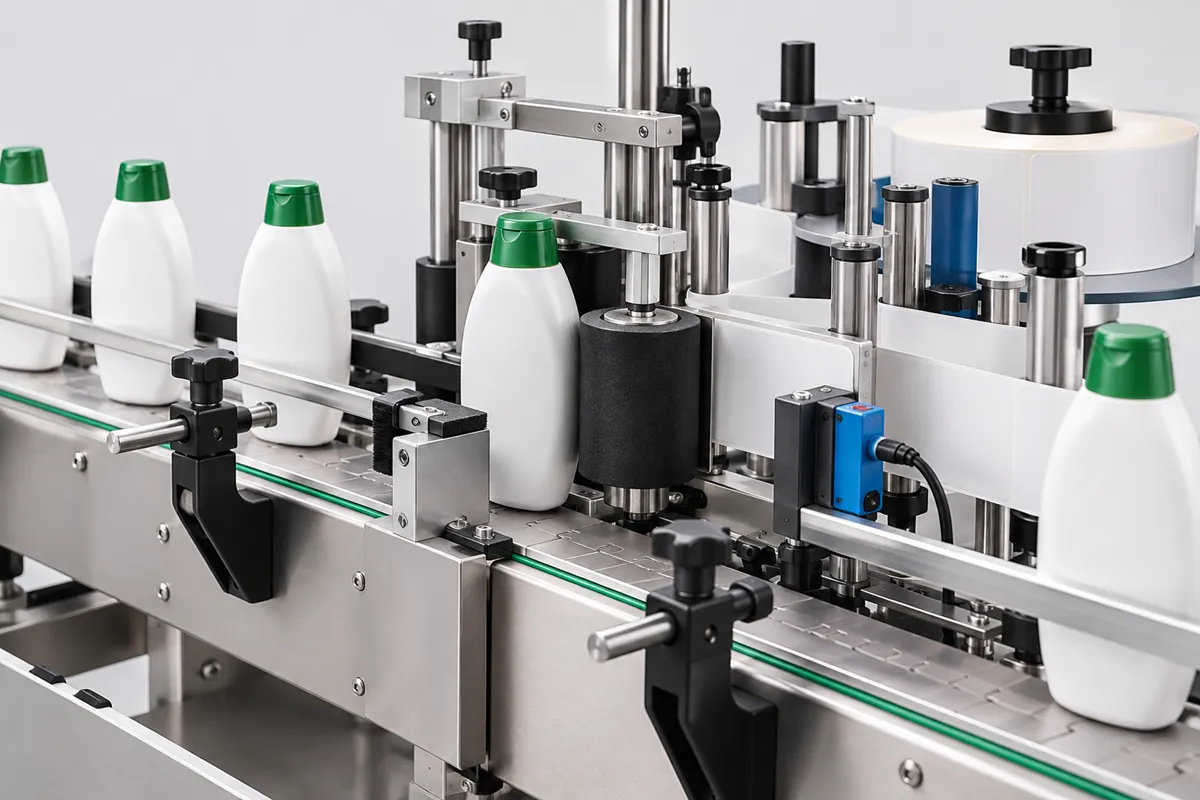
What Is Label Thickness?
Label thickness is the thickness of the label material, usually measured in microns (µm). It may include paper or film material, while the adhesive and release liner can contribute to the overall thickness of the label stock.
For pressure-sensitive labels supplied on rolls, it is important to distinguish between the face material thickness and the total label construction thickness, which may include the adhesive and backing liner.
For example, a paper label and a polypropylene (PP) film label may have the same dimensions but behave differently during dispensing because their stiffness, flexibility and surface properties differ.
How Does Label Thickness Affect Machine Performance?
1. Label Feeding and Dispensing
Labels must move through the dispensing system at a consistent rate. Very thin or flexible materials may wrinkle, stretch or tear if the setup is unsuitable. Thicker or stiffer materials may need different dispensing adjustments, depending on the label design and machine configuration.
The correct setup depends on more than thickness alone. Material type, adhesive, liner stiffness and label dimensions also influence feeding performance.
2. Label Separation at the Dispensing Edge
During application, the label separates from its backing liner at the dispensing edge. A label’s stiffness and flexibility affect how readily it separates and transfers to the product.
If the material does not suit the dispensing arrangement, labels may not peel away consistently, potentially causing missed applications or production interruptions.
3. Application on Curved and Flat Surfaces
The shape of your product matters. A flexible label may conform more easily to a curved bottle, while a stiffer label may require careful evaluation on smaller diameters or contoured surfaces.
For flat containers, label stiffness can influence how the label settles against the surface. The label material and adhesive must also be suitable for the container’s surface.
4. Label Adhesion and Finish
Thickness alone does not determine how well a label sticks. Adhesive type, surface cleanliness, container material, temperature and application pressure can all affect adhesion.
If you notice lifting edges, bubbles or wrinkles, the cause may involve the label construction, bottle surface or application setup rather than thickness alone.
Paper Labels vs Film Labels
| Label type | Typical characteristics | What to check |
|---|---|---|
| Paper labels | Often flexible and available in different finishes | Tear resistance, liner behaviour and adhesive suitability |
| PP film labels | Generally moisture-resistant and flexible | Material stiffness, transparency and dispensing behaviour |
| PE film labels | Often more flexible and suitable for squeezable containers | Stretching, container shape and adhesive compatibility |
| PET film labels | Generally stronger and more dimensionally stable | Stiffness, dispensing requirements and application surface |
These are general material characteristics. Actual performance depends on the specific label grade, thickness, adhesive and liner construction.
Does Thicker Label Material Require a Different Machine?
Not necessarily. A labelling machine may handle several label materials if they fall within its supported specifications and the dispensing system can be adjusted appropriately.
However, a different setup or additional consideration may be needed when working with very thin films, stiff materials, transparent labels or unusual label shapes.
Before purchasing, confirm the acceptable label specifications with the machine supplier. If you plan to switch between materials, explain this requirement during the quotation process.
What Should You Check Before Buying a Labelling Machine?
To assess compatibility, share these details with your machine supplier:
- Label material, such as paper, PP, PE or PET
- Face material thickness and total label construction thickness, if available
- Label width, height and gap between labels
- Backing liner material and thickness
- Bottle shape, dimensions and surface material
- Required production speed in bottles per minute
Where possible, provide a sample of the actual label roll and the container on which it will be applied. A practical trial can reveal feeding, dispensing and application issues that specifications alone may not identify.
Choose the Right Labelling Setup with Metson Machines
At Metson Machines, we understand that consistent labelling depends on matching the machine to your product and label construction. Choosing based only on label dimensions or machine speed can overlook important compatibility factors.
Share your label material, thickness, roll specifications, bottle details and production target with our team. We can then discuss the relevant machine requirements and help you evaluate a suitable configuration.
Contact Metson Machines to discuss your labelling application and find a machine that suits your labels, containers and production needs.