
Choosing a labelling machine is not just about speed and price. The labels you use must also fit the machine correctly. If the label roll has the wrong core size, outer diameter or winding direction, it may not fit the holder or feed properly.
At Metson Machines, we recommend checking your label-roll specifications before finalising a machine. These details help you avoid compatibility issues and choose a setup that suits your production requirements.
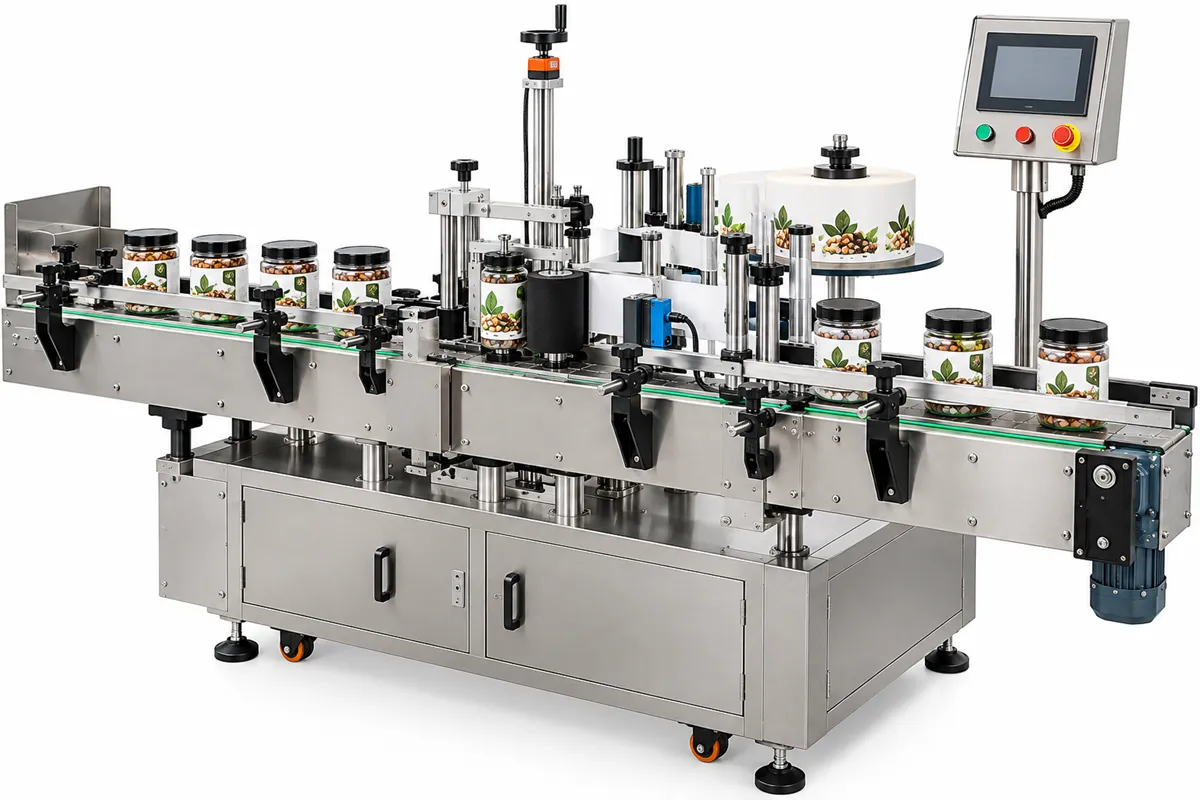
What Is Label Core Size?
The label core is the hollow cardboard or plastic tube around which the label backing material is wound. Core size refers to the inside diameter of this tube, not the overall diameter of the label roll.
Common core sizes include 25 mm, 40 mm and 76 mm, although the sizes available depend on the label supplier and application.
A machine’s roll holder must accommodate the core size. If the core is too small or too large for the holder, the roll may not mount correctly or remain stable during operation.
Before ordering a machine, confirm the required core size with the manufacturer and your label supplier.
What Is Label Roll Diameter?
Roll diameter refers to the outside diameter of the complete roll, including the labels and backing paper.
The larger the roll, the more labels it can generally hold, assuming the label dimensions and backing thickness remain the same. Larger rolls can reduce the frequency of roll changes, which may be useful for continuous production.
However, the machine has a maximum roll diameter it can accommodate. If your roll exceeds this limit, it may not fit inside the roll holder or unwind correctly.
For example, if your label supplier provides rolls with an outer diameter of 300 mm, but the machine supports only up to 250 mm, the roll will not meet the machine’s stated capacity.
These figures are illustrative. Always confirm the actual limits for your machine.
Core Size vs Roll Diameter: What Is the Difference?
| Specification | What it measures | Why it matters |
|---|---|---|
| Core size | Inside diameter of the roll’s centre tube | Determines whether the roll fits the holder |
| Roll diameter | Outside diameter of the complete roll | Determines whether the roll fits and how often it needs replacing |
| Label width or height | Dimensions of each individual label | Affects label dispensing and application |
| Label gap | Space between consecutive labels on the backing | Must suit the machine’s label sensor and dispensing setup |
| Winding direction | How labels are oriented on the roll | Affects how the label is presented during dispensing |
These specifications work together. A roll may fit the holder but still be unsuitable because of its label dimensions, gap, material or winding direction.
How to Check Whether a Label Roll Is Compatible
Before buying a labelling machine, ask your label supplier for the roll specifications and confirm them with us.
1. Check the core diameter. Measure the inside of the cardboard tube or request the exact measurement from your label supplier.
2. Measure the outer roll diameter. Check the full diameter of the wound roll, not just the cardboard core.
3. Confirm label dimensions. Share the label width, height and gap between labels, along with the bottle dimensions.
4. Check the winding direction. The orientation of the labels on the roll must suit the machine’s dispensing arrangement.
5. Confirm the label material. Paper, film and transparent labels can behave differently during dispensing. Transparent labels, in particular, may require a suitable sensor or detection arrangement.
If your production uses multiple label sizes or roll formats, share all the variations before finalising the machine configuration.
What Happens If the Label Roll Is Not Compatible?
An incorrect roll specification can lead to practical problems such as:
- The roll not fitting securely on the holder
- Labels feeding unevenly or slipping
- Label detection or dispensing problems
- More frequent roll changes than expected
- Unnecessary production interruptions
Not every feeding issue is caused by core size or roll diameter. Sensor settings, label material, tension, bottle positioning and machine setup can also affect performance. That is why checking the complete label specification is important.
What Information Should You Share Before Requesting a Quotation?
To help identify a suitable labelling machine, prepare the following details:
| Information needed | Example |
|---|---|
| Bottle type | Round, square or flat |
| Label dimensions | Width × height in mm |
| Core size | Inside diameter in mm |
| Maximum roll diameter | Outside diameter in mm |
| Label material | Paper, opaque film or transparent film |
| Production target | Bottles per minute |
Providing these details at the quotation stage makes it easier to assess compatibility before you invest in a machine.
Choose the Right Labelling Machine with Metson Machines
At Metson Machines, we understand that reliable labelling depends on more than the machine itself. The label roll, bottle shape, label dimensions and production speed must work together.
Before selecting a machine, share your label-roll specifications and bottle details with our team. Where possible, providing a sample label roll and bottle can help confirm whether the proposed configuration suits your application.
Contact Metson Machines to discuss your labelling requirements and find a machine configuration that works with your labels, bottles and production process.