
Yes. Product shape can directly affect the accuracy and consistency of a sticker labelling machine.
This is one of the most important points to consider before selecting a machine. A labelling machine does not apply a sticker to an abstract “product”; it has to position, hold, move and label a physical product with a particular geometry.
A round bottle, oval bottle, square container and tapered jar may all require different product-handling arrangements, even when their label sizes are similar.
As a sticker labelling machine manufacturer, we therefore look at the product shape first, not just the label and required speed.
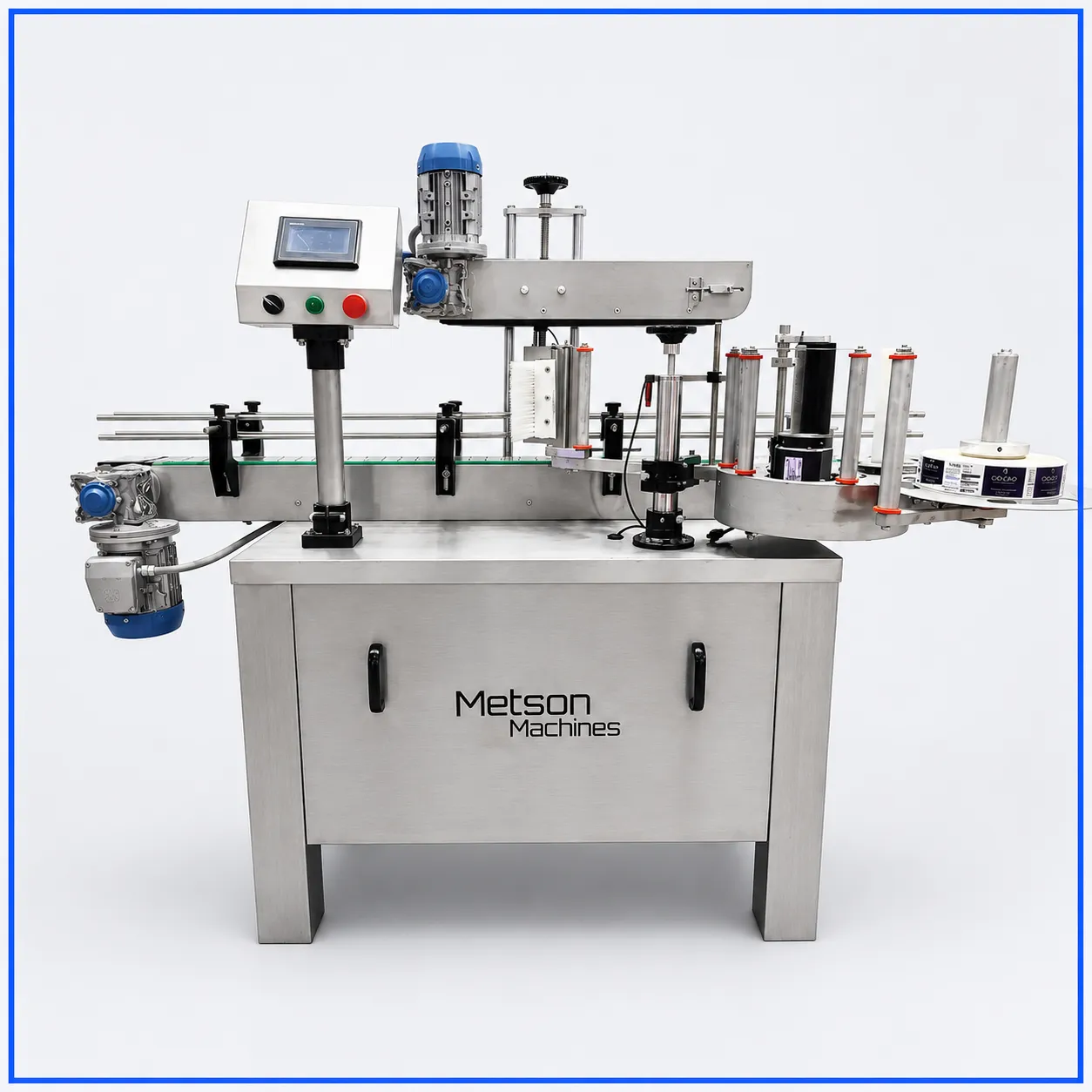
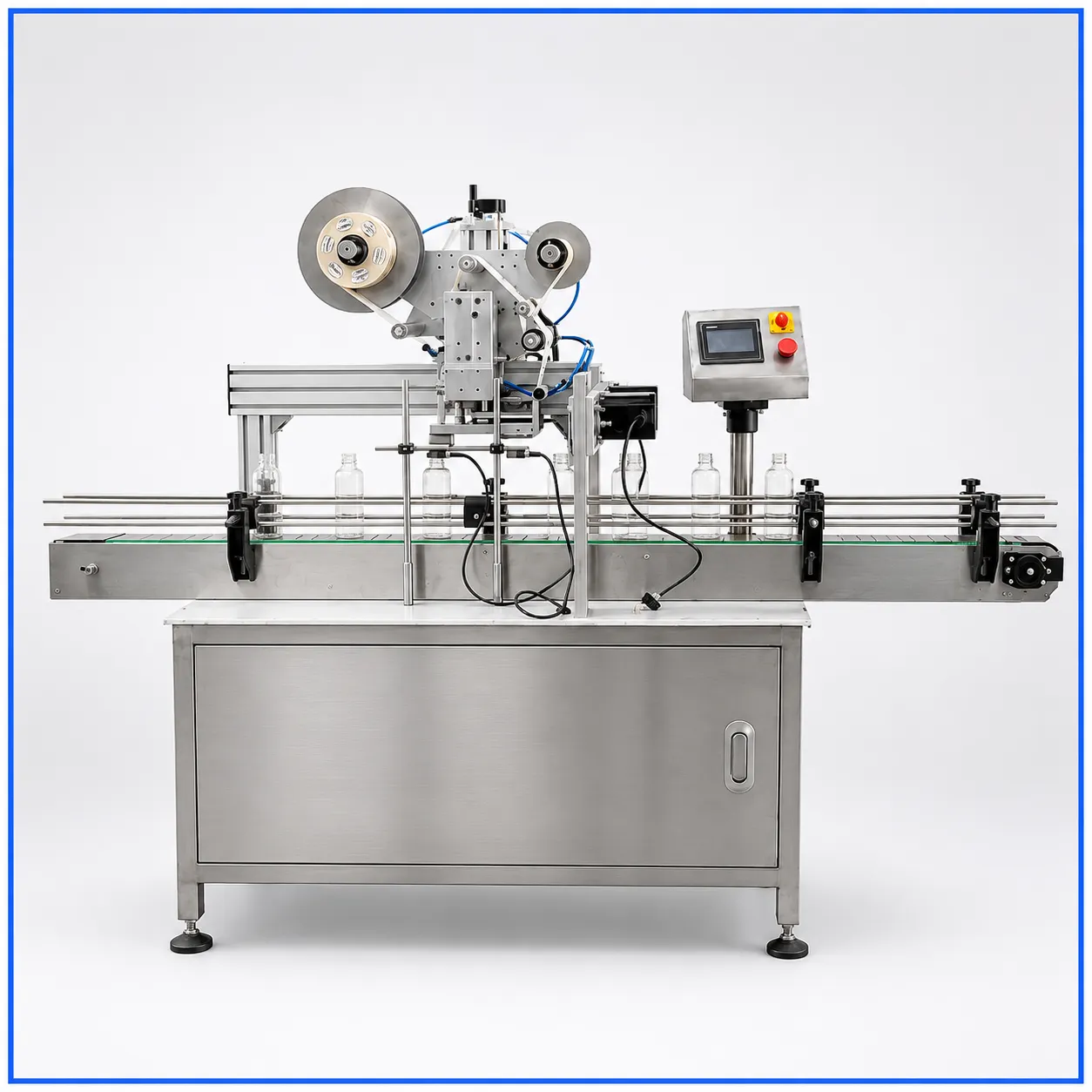
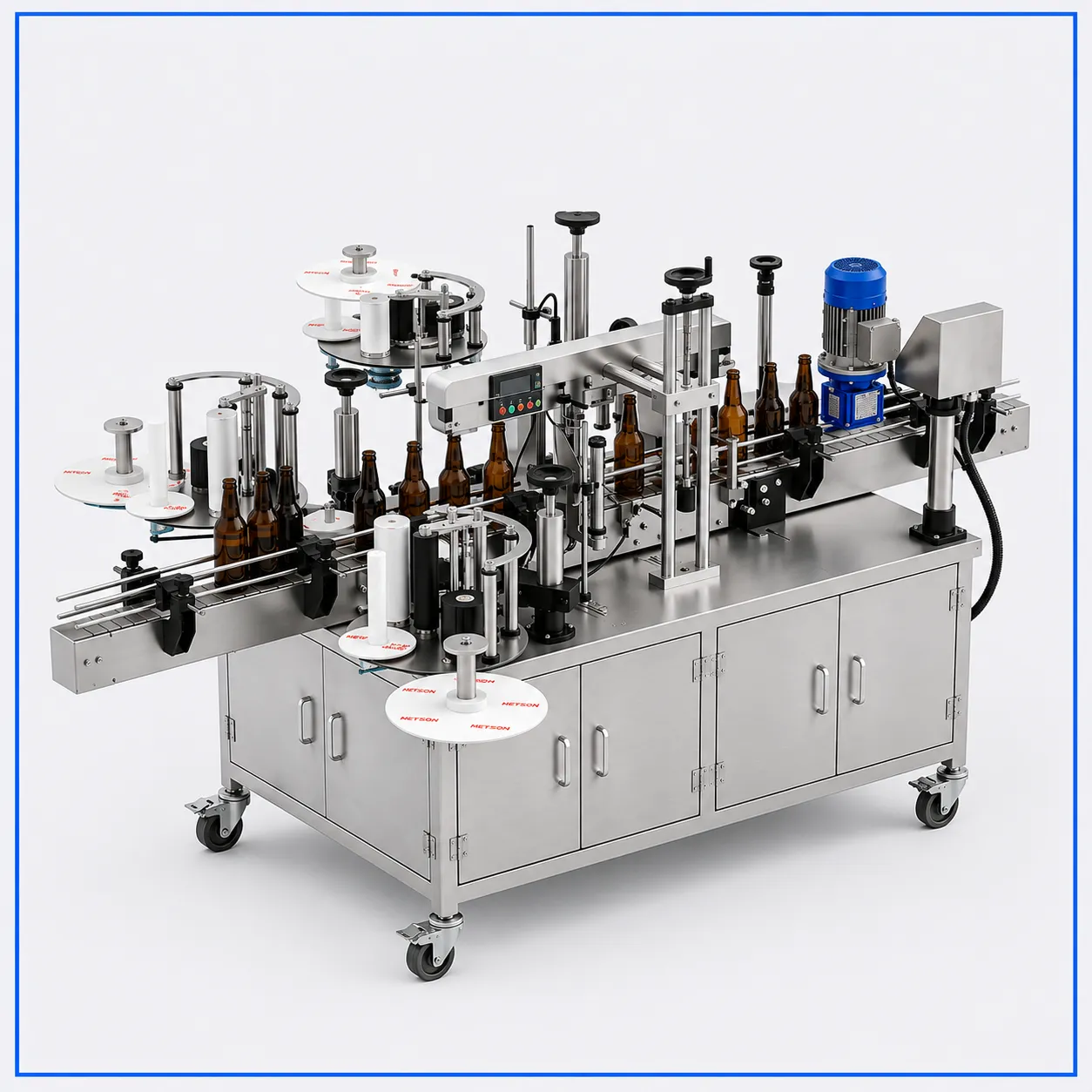
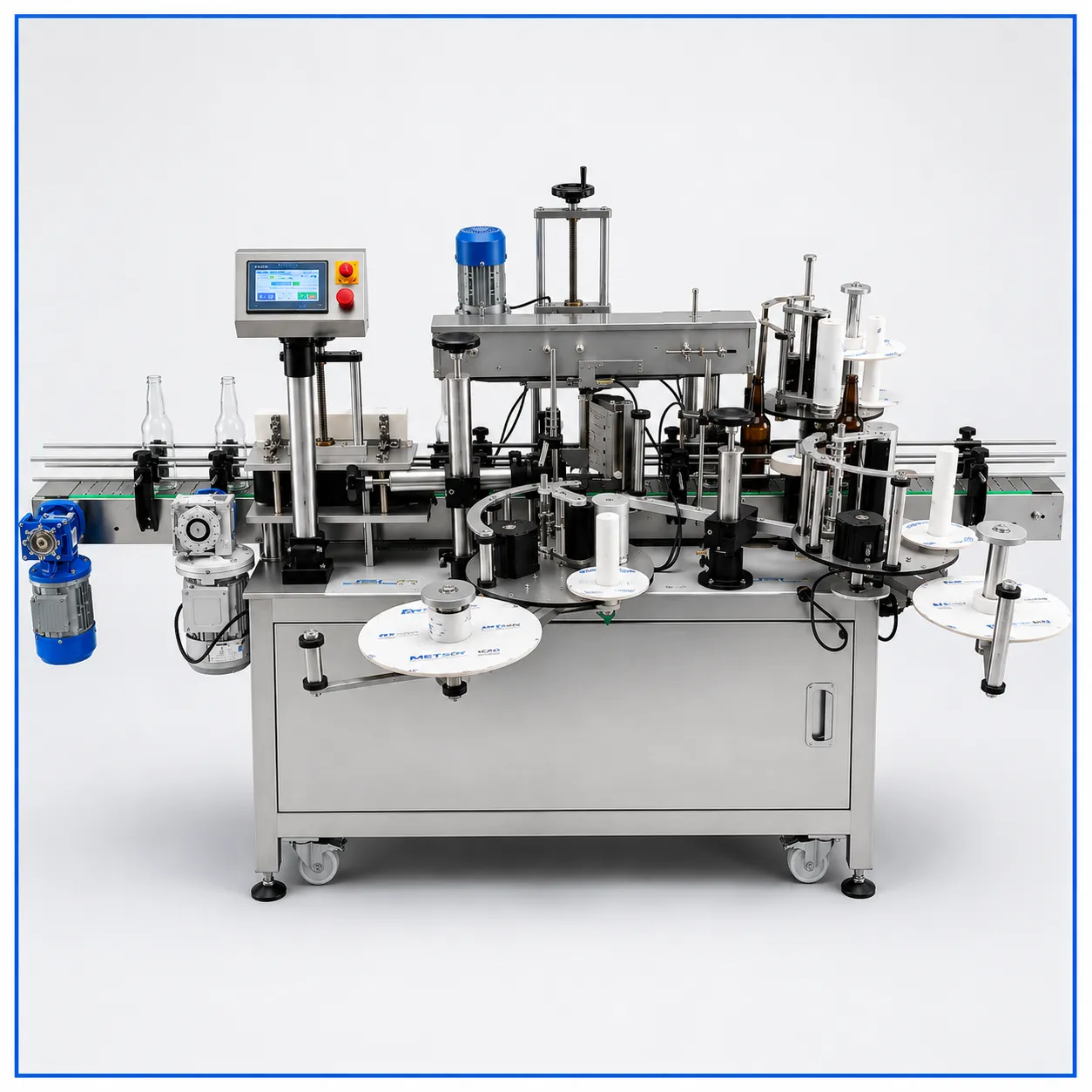
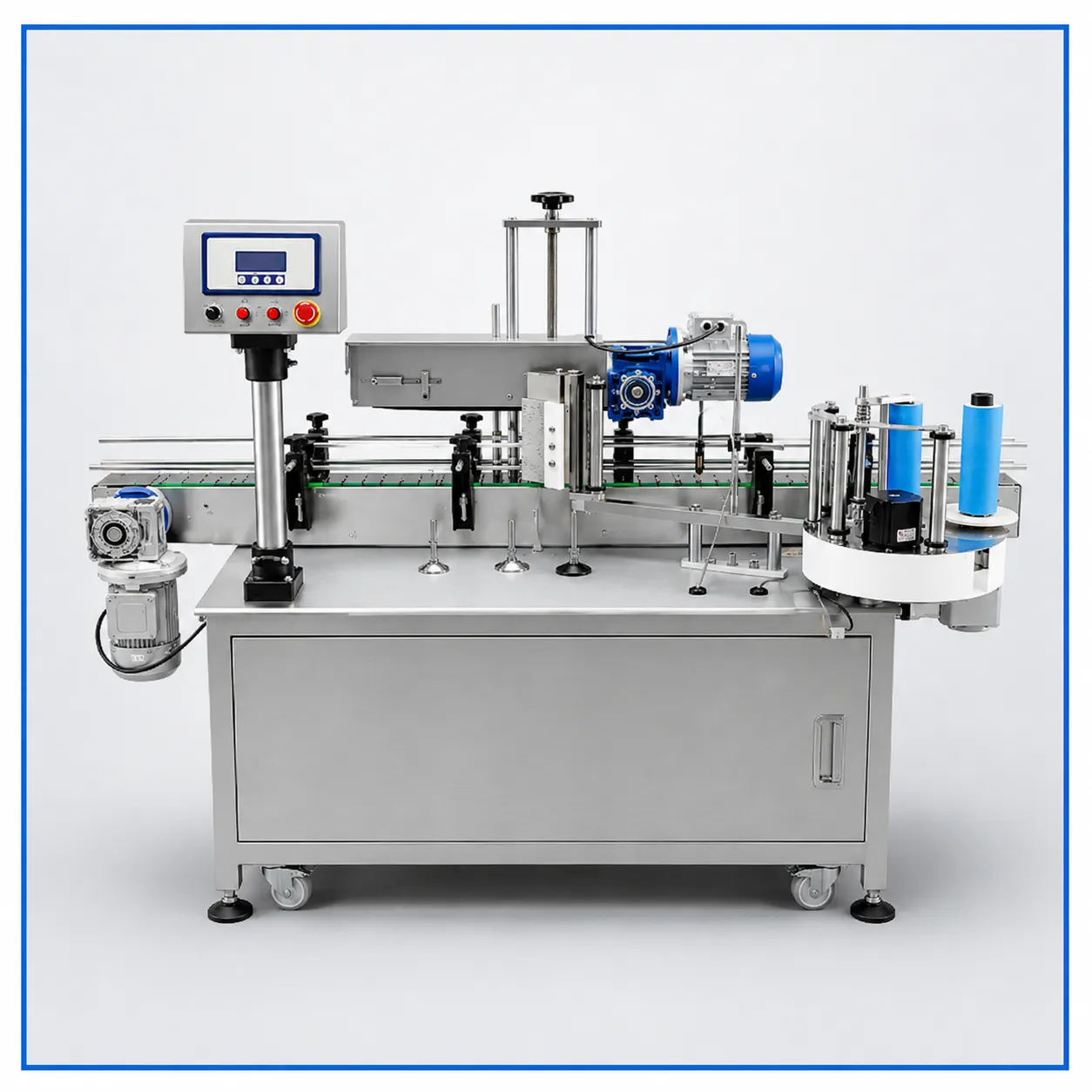
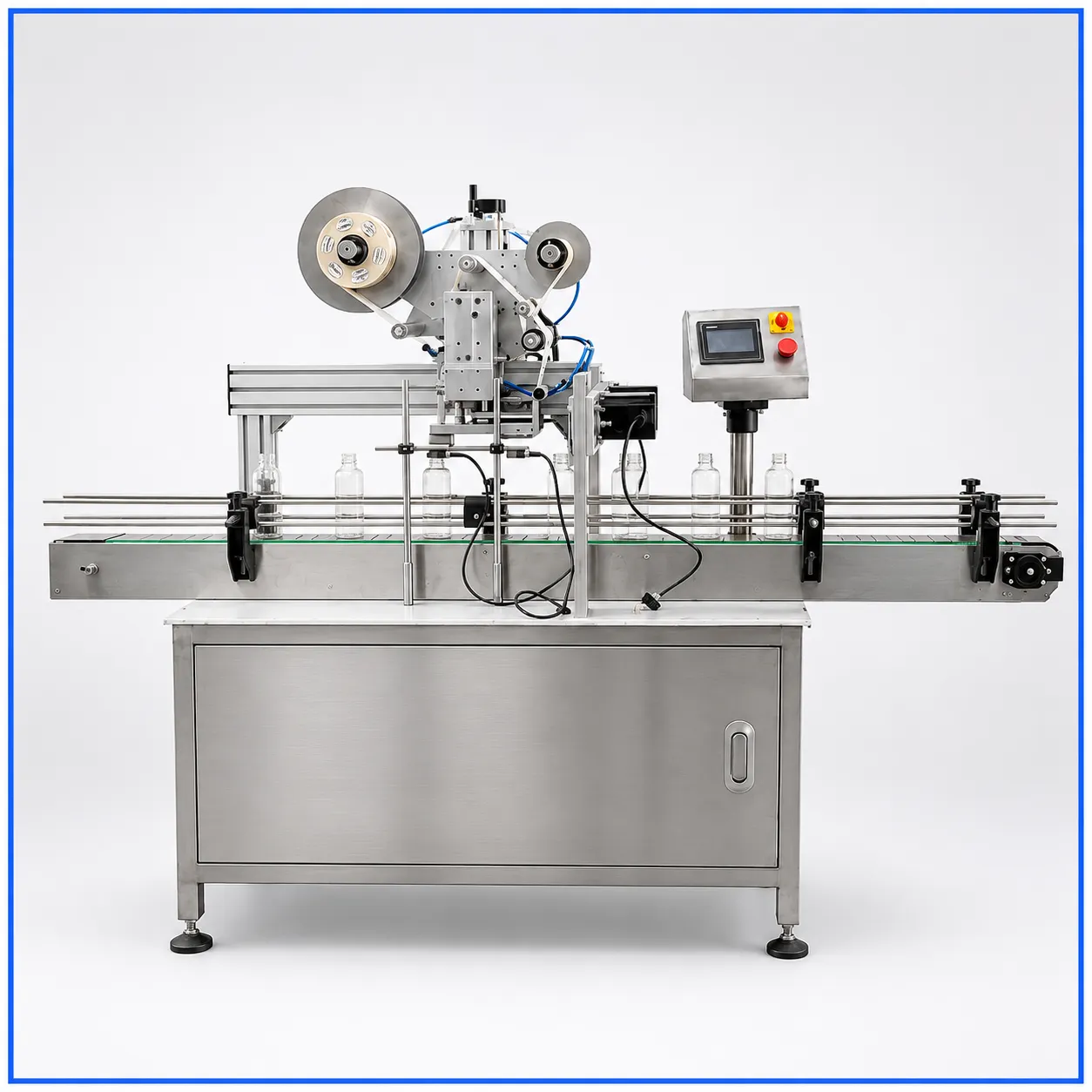
Why Does Product Shape Matter in a Sticker Labelling Machine?
During automatic labelling, the product must travel through the machine in a controlled and repeatable position.
For accurate labelling, three things need to remain consistent:
Product position → Product movement → Label application
If the shape allows the product to move, rotate, tilt or shift while passing through the machine, the label position can also change.
For example, a round bottle may rotate easily, while a square bottle naturally has defined faces. An oval container can behave differently again because its width changes as it moves through the labelling station.
This is why the same sticker labelling machine configuration cannot automatically be assumed to work equally well for every product shape.
Round Products: Generally Easier to Control
Round bottles are one of the most common applications for a sticker labelling machine.
For cylindrical products, the machine can typically use:
- Side guides
- Conveyor
- Product stabilisers
- Labelling roller
- Wrap-around arrangement where required
If the requirement is to apply a label around a round bottle, controlled product rotation becomes particularly important.
The machine needs to maintain consistent contact between the product and the labelling mechanism while the label is being applied.
A change in bottle diameter can therefore require adjustments to the product guides and labelling head.
Square and Rectangular Products
Square and rectangular containers provide a different challenge.
The advantage is that the product has defined surfaces, making it easier to identify a front or side.
However, the corners can affect how the product contacts the labelling mechanism.
For example, if a front label needs to be positioned exactly in the centre of a flat face, the product must enter the labelling station consistently.
If the product is allowed to rotate slightly or move sideways, the label can appear off-centre even though the labelling head itself is working correctly.
For these applications, product alignment and guiding become particularly important.
Oval Products Require More Attention
Oval bottles are common in cosmetics, personal care, pharmaceutical and other industries.
Their shape can create a different product-handling requirement because the product width changes around its body.
A machine that works perfectly on a cylindrical bottle should therefore not automatically be assumed to provide the same performance on an oval bottle.
Depending on the application, the sticker labelling machine may require appropriate guiding and stabilisation to maintain the required orientation.
This becomes especially important when the label has to be positioned precisely on the front of the oval bottle.
What About Tapered Bottles?
Tapered products can be particularly important to evaluate before finalising a sticker labelling machine.
A bottle that becomes narrower toward the top does not present the same surface geometry as a straight cylindrical bottle.
When a label is applied, the change in surface diameter can affect how the label contacts the product.
For example, if the label is relatively large compared with the tapered surface, improper application conditions can contribute to:
- Wrinkles
- Air pockets
- Label lifting
- Uneven adhesion
- Position variation
The solution is not necessarily a different machine. It may instead involve the correct application method, roller arrangement, product support and label specification.
This is why tapered products should ideally be tested before machine selection.
Irregular Product Shapes Are a Separate Application
Some products cannot be classified simply as round, square or oval.
They may have:
- Curved surfaces
- Recessed areas
- Handles
- Ribs
- Grooves
- Uneven walls
- Multiple surface levels
For these products, the machine must be designed around the actual area where the sticker is going to be applied.
A product may be easy to transport on a conveyor but difficult to label accurately because the intended label surface is not consistent.
This is an important distinction:
Product conveyance and label application are two different engineering problems.
A product can move perfectly through a machine and still require a specialised labelling arrangement.
Does Product Shape Affect Front and Back Labelling?
Yes.
If you require labels on the front and back of a container, maintaining the product’s orientation becomes critical.
This is particularly relevant for:
- Oval bottles
- Rectangular bottles
- Square containers
- Products with a defined front face
A Front and Back Labelling Machine must maintain the product orientation while both labels are positioned relative to the product.
If the product rotates or shifts between the two labelling points, the front and back labels may not remain correctly aligned.
For this reason, the product shape and required label positions should be evaluated together.
What If I Need a Top Label?
A top label is a different application from a conventional side sticker.
For products such as cartons, boxes, lids, containers or other products with a suitable top surface, a Top Label Applicator Machine may be more appropriate.
Here, the important factors include:
- Top-surface dimensions
- Product height
- Surface flatness
- Product spacing
- Product orientation
- Label size
Again, the machine should be selected based on the actual product geometry rather than simply the label specification.
Does Product Material Also Matter?
Yes, although material and shape are separate factors.
A PET bottle, glass bottle and HDPE container may have different surface characteristics.
When combined with shape, these characteristics can affect the final labelling result.
For example:
Round + rigid + smooth surface
is a relatively different application from:
Oval + flexible + textured surface.
The sticker labelling machine may need to be configured differently depending on the combination.
Product Shape Can Also Affect Machine Speed
Labelling accuracy and production speed are often connected.
A simple cylindrical bottle may allow relatively high-speed product handling.
A tall, narrow, lightweight or irregular product may require more controlled movement.
If the product is unstable at higher speeds, increasing the conveyor speed does not necessarily increase useful production. It can instead create product movement and inconsistent label placement.
Therefore, when specifying a sticker labelling machine, the required speed should always be considered together with product geometry.
What Information Should You Give the Manufacturer?
Before purchasing a sticker labelling machine, provide the manufacturer with the actual product information.
Ideally, provide:
- Product photographs
- Product dimensions
- Product drawing, if available
- Diameter or width
- Product height
- Shape
- Material
- Weight
- Label dimensions
- Label material
- Exact label position
- Required production speed
If possible, provide actual product samples and labels for testing.
This allows the manufacturer to determine the appropriate product-handling arrangement instead of making a recommendation based only on dimensions.
Should Every Product Shape Have a Different Machine?
No.
A good sticker labelling machine can often accommodate multiple products when their shapes and application requirements are within a suitable operating range.
For example, several cylindrical bottles of different diameters may be handled on the same machine through adjustments.
However, when product geometry changes significantly, the machine may require:
- Additional adjustments
- Different product guides
- Change parts
- Different labelling-head arrangements
- Special product handling
The decision should be based on the complete product range, not on one sample bottle.
A Simple Test We Recommend
If you’re unsure whether your product shape is suitable for a sticker labelling machine, don’t rely only on a catalogue specification.
Ask the manufacturer to conduct a product trial.
During the trial, check:
1. Product movement
Does the product remain stable?
2. Product orientation
Does it remain in the required position?
3. Label position
Does the sticker consistently reach the intended location?
4. Label adhesion
Does the sticker properly conform to the surface?
5. Production speed
Can the machine achieve the required output without sacrificing accuracy?
6. Changeover
Can other product shapes or sizes be introduced without excessive setup time?
These tests provide much more useful information than simply asking whether the machine is “suitable for all shapes.”
Manufacturer’s Perspective: Don’t Specify the Machine by Bottle Size Alone
When customers ask us for a sticker labelling machine, we don’t look only at whether the bottle is 100 ml, 250 ml or 500 ml.
We look at:
Shape + Dimensions + Label + Position + Speed + Product Handling
That combination determines the appropriate machine configuration.
A 500 ml round bottle and a 500 ml oval bottle may require different considerations even though their capacity is identical.
Similarly, two bottles with identical dimensions can behave differently if their surface geometry or material is different.
Final Takeaway
Yes, product shape can significantly affect sticker labelling machine accuracy.
Round, square, oval, tapered and irregular products can each require different methods of product guiding, positioning and label application.
The best approach is not to ask only:
“Can this sticker labelling machine label my product?”
Instead, ask the manufacturer:
“Can this machine maintain the required label position on my actual product shape, at my required production speed, and with practical changeover between my products?”
That is the question that leads to the right machine configuration—and ultimately to consistent labelling in day-to-day production.
Need a Sticker Labelling Machine for Your Product?
If you are planning to automate your labelling process, share your product shape, dimensions, label size, label position and required production speed with us.
We can evaluate your application and recommend the suitable sticker labelling machine configuration based on your actual product requirements.
Request a quotation today and discuss your labelling application with our team.