
Yes, one sticker labelling machine can handle multiple bottle sizes—but the number of sizes it can handle reliably depends on the bottle dimensions, shape, label position, required speed and machine configuration.
As a manufacturer, we don’t determine this simply by looking at whether a bottle is 100 ml, 250 ml or 500 ml. Bottle capacity alone does not tell us whether the same labelling machine will work.
For example, two 500 ml bottles can have completely different diameters, heights and shapes. One may be cylindrical, another oval or square. They may therefore require very different product-handling arrangements.
This is what should be evaluated before deciding whether you need one machine or separate machines.
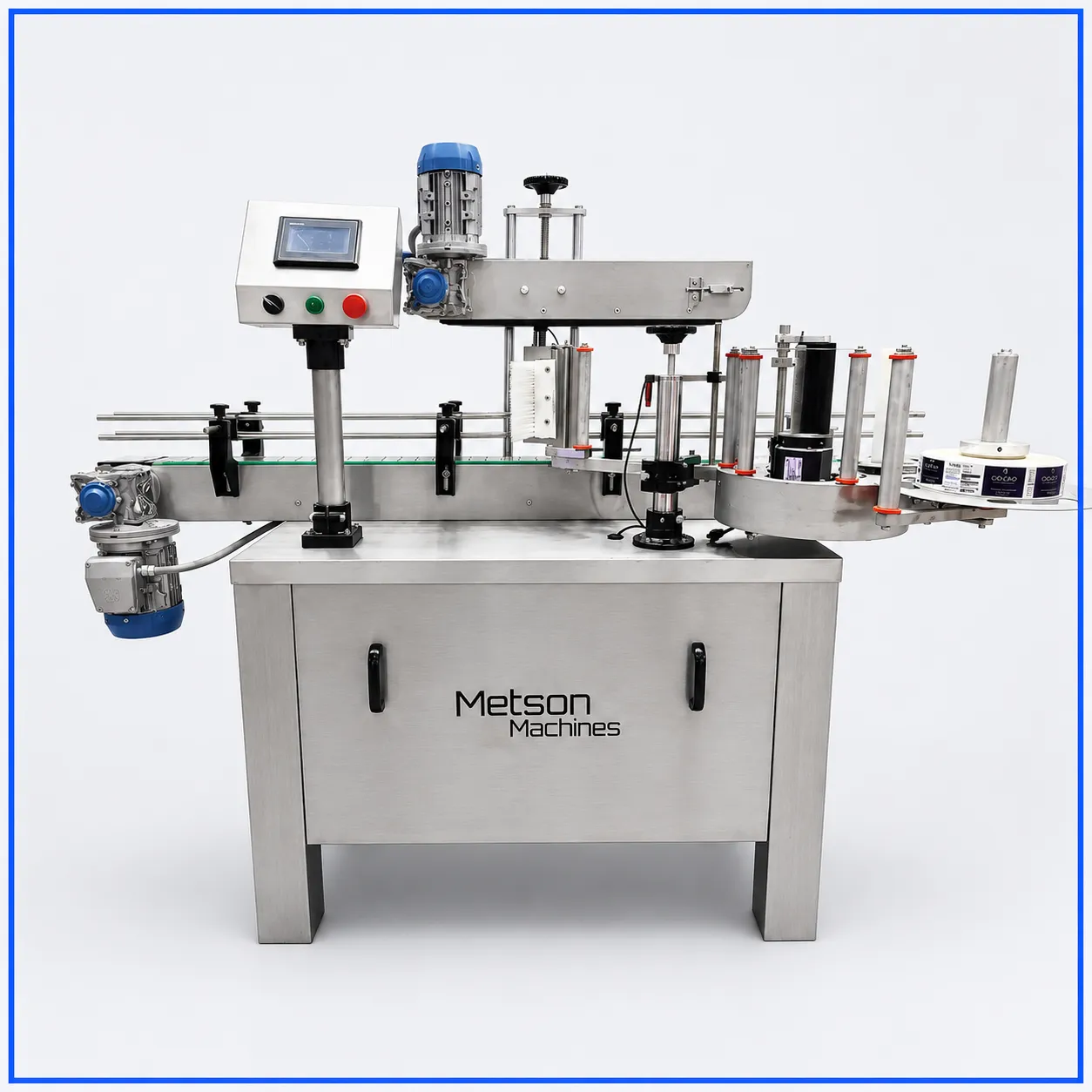
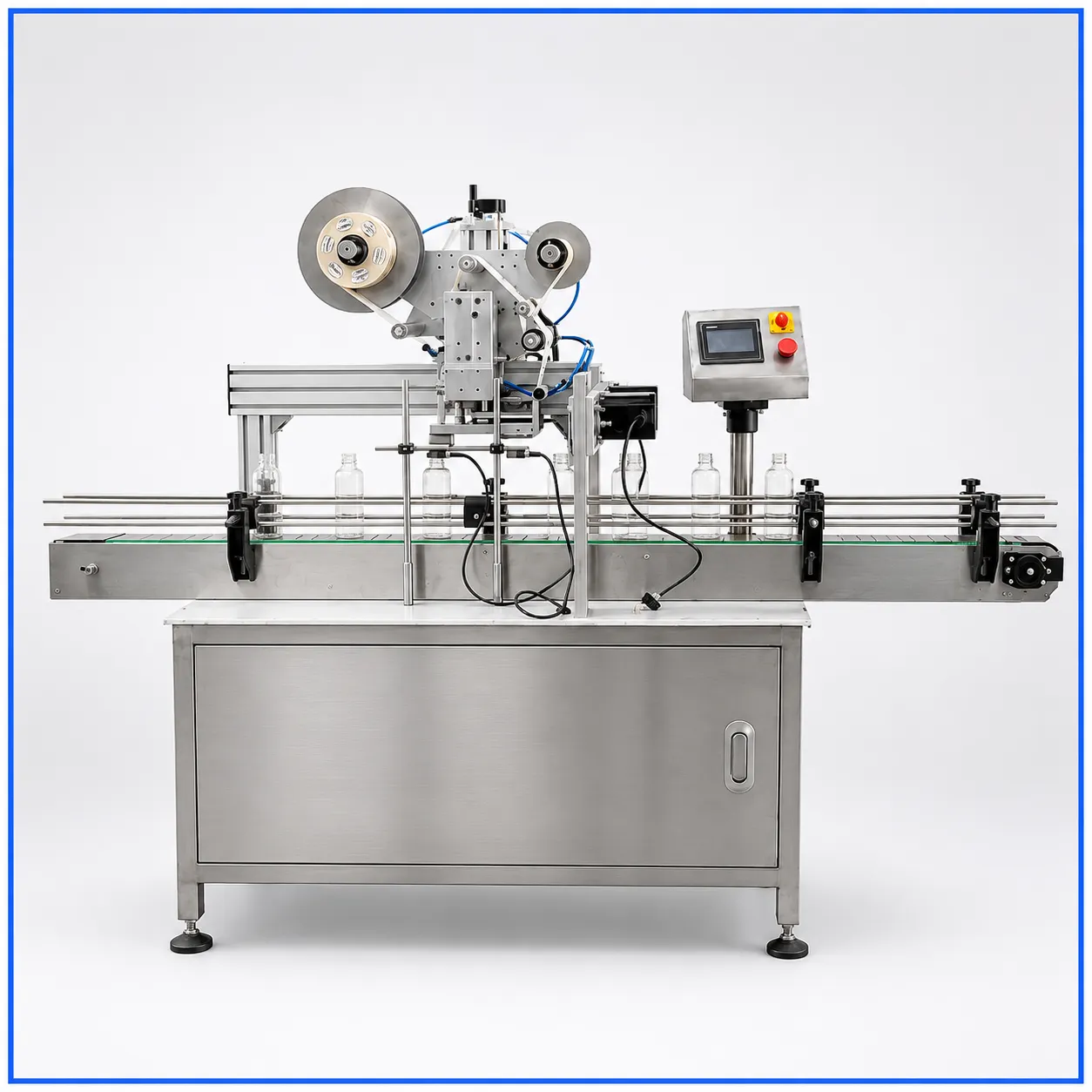
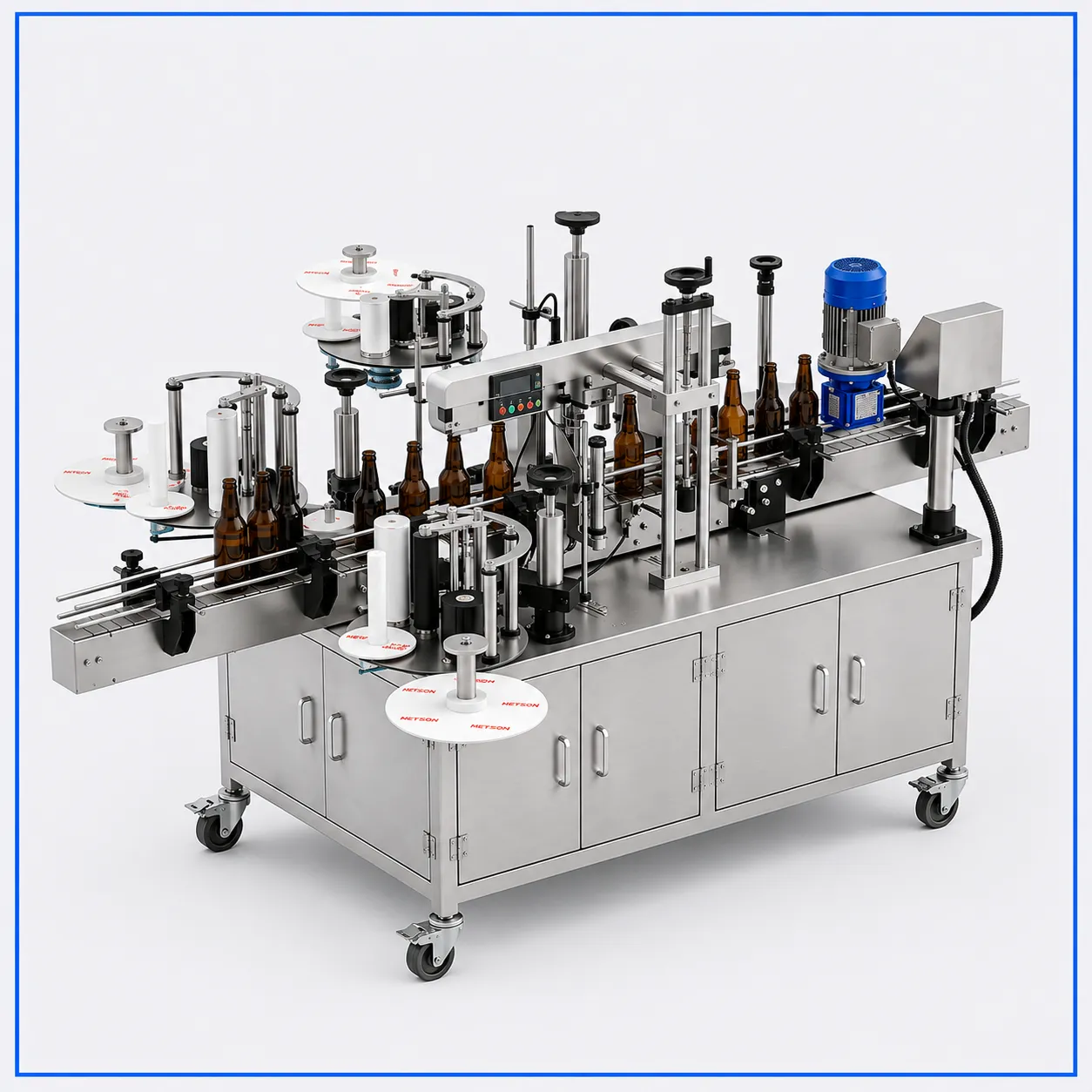
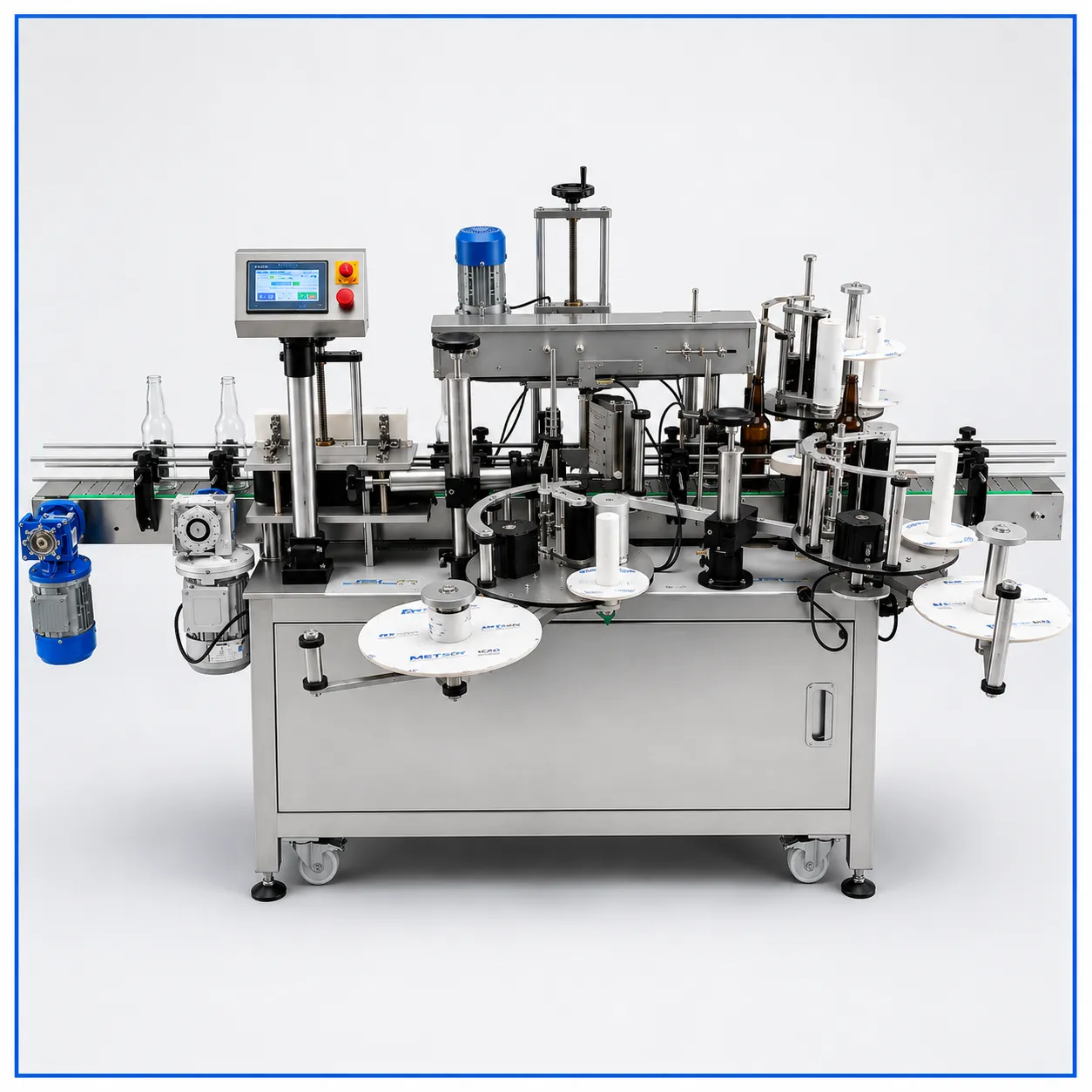
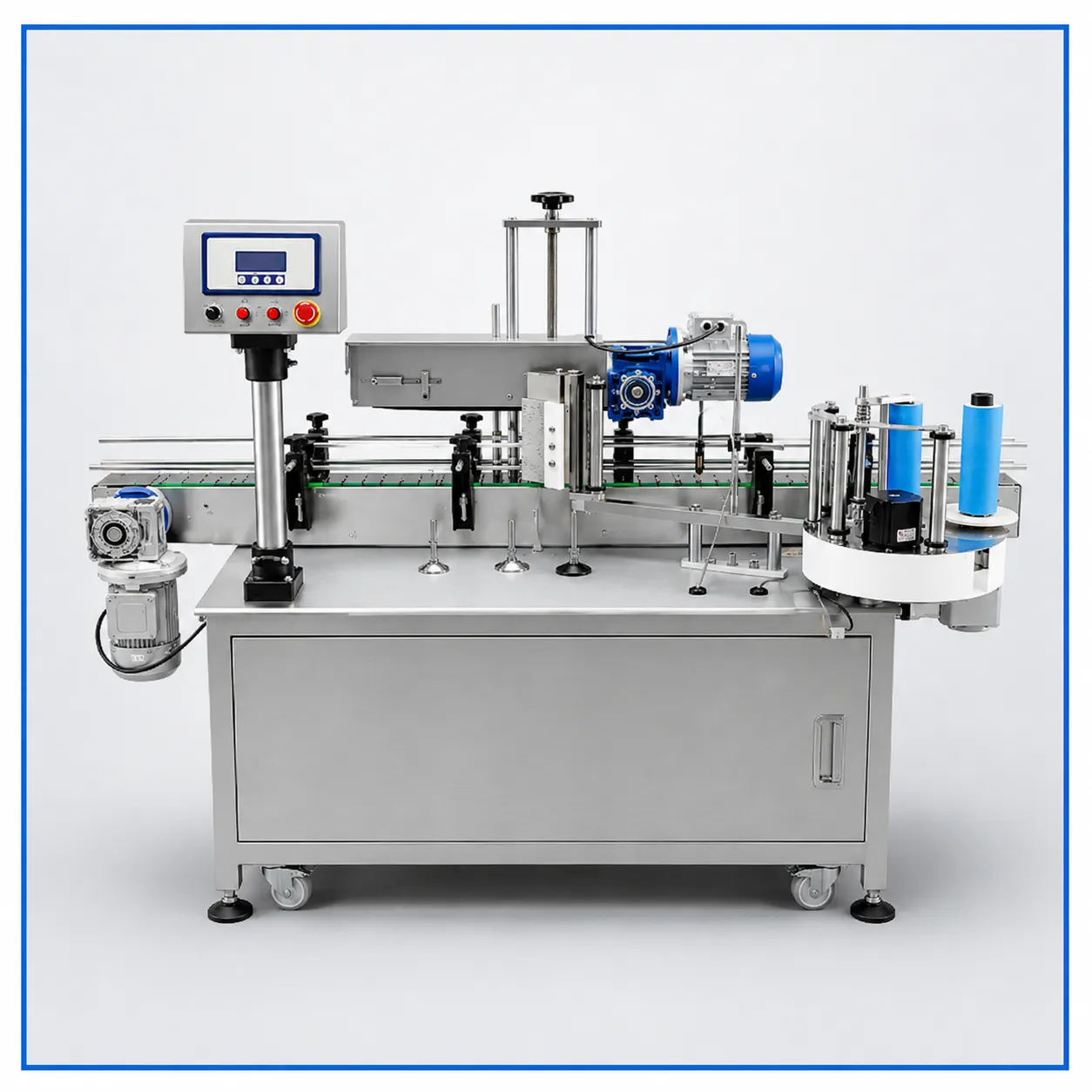
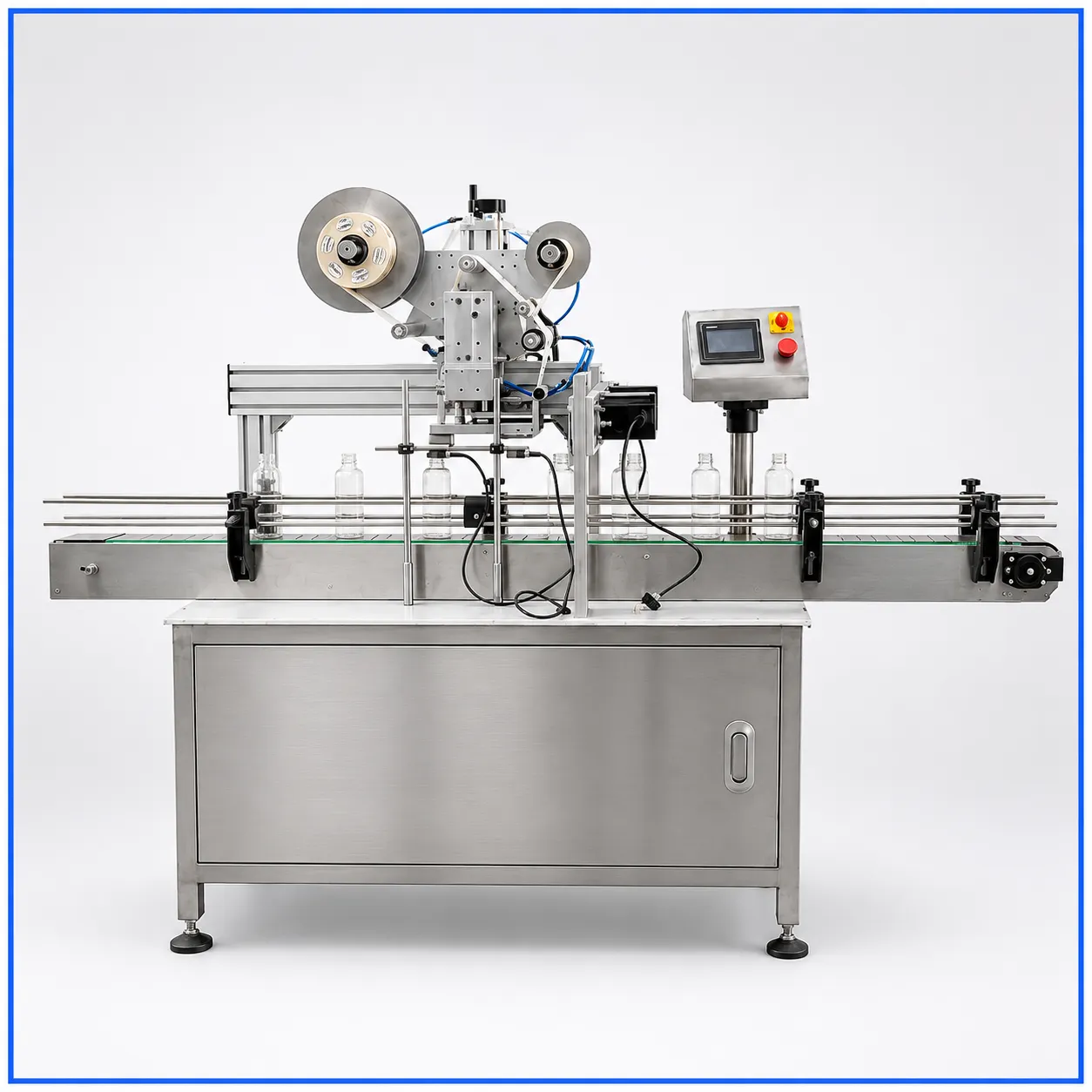
What We Check Before Confirming Multiple Bottle Sizes
When a customer approaches us with several bottle sizes, we normally start with the actual product dimensions rather than the bottle volume.
The main parameters are:
- Bottle diameter
- Bottle height
- Bottle shape
- Bottle material
- Label width and height
- Label position
- Required labelling speed
- Number of bottles to be handled per minute
- Frequency of bottle-size changeover
These factors determine whether the same machine can be configured for the complete range.
Bottle diameter is more important than bottle capacity
Consider a customer manufacturing three products:
- 100 ml cylindrical bottle
- 250 ml cylindrical bottle
- 500 ml cylindrical bottle
It may be possible to run all three on the same Bottle Sticker Labelling Machine, provided their diameters and other dimensions fall within the machine’s working range.
But if the 100 ml bottle is very narrow and the 500 ml bottle is substantially wider, the machine must be designed with sufficient adjustment range.
The question is therefore not:
“How many bottle sizes can the machine label?”
The better question is:
“What is the minimum and maximum product diameter that this particular machine can handle while maintaining stable product movement and label accuracy?”
That is the specification a buyer should ask for.
What About Different Bottle Heights?
Bottle height is another factor that affects machine adjustment.
Suppose two bottles have similar diameters but different heights:
- Bottle A: 100 mm high
- Bottle B: 180 mm high
The same basic labelling system may handle both, but the labelling head, sensor and product guides may need to be adjusted.
This is normally manageable when the machine has adequate adjustment provisions.
However, if the difference is significant, the manufacturer should check whether the bottle remains properly supported and controlled throughout the labelling process.
A machine that can accommodate different diameters is not automatically suitable for every bottle height.
Round, Oval, Square and Irregular Bottles Are Different Applications
This is where the term “multi-size labelling machine” can sometimes be misleading.
Multiple sizes are relatively straightforward when the bottles have similar geometry.
For example:
100 ml round → 200 ml round → 500 ml round
is a very different requirement from:
100 ml round → 250 ml oval → 500 ml square
With round bottles, the product can generally be guided and positioned consistently.
With oval, square or irregular bottles, the machine may need a different arrangement to control the product and ensure that the label is applied at the correct location.
Therefore, when a customer tells us, “We have five bottle sizes,” our next question is:
“Are all five bottles the same shape?”
That answer can change the machine configuration.
Does One Machine Need Different Change Parts for Every Bottle?
Not necessarily.
A properly designed machine can often accommodate a range of products through adjustable settings.
Depending on the application, the operator may adjust:
- Side guides
- Product guide rails
- Labelling-head position
- Sensor position
- Product spacing
- Roller or belt position
- Label dispensing position
For some applications, however, dedicated change parts may be recommended.
This usually depends on how different the products are and how accurately they need to be positioned.
The important question for a buyer is not simply:
“Does the machine require change parts?”
Ask:
“Which parts need to be changed, how long does the changeover take, and how many different sets will I need for my complete bottle range?”
That gives you the actual operating cost of a multi-size machine.
What Happens to Production Speed When Bottle Size Changes?
This is an important point that is often missed when comparing labelling machines.
A machine may have a headline speed such as 60, 100 or 120 bottles per minute. But maximum machine speed does not necessarily mean every bottle in your range will run at that speed.
Bottle diameter, shape, label size and product stability can affect the practical operating speed.
For example, a small stable cylindrical bottle may run comfortably at a high speed, while a tall, lightweight or irregular bottle may require more controlled handling.
Therefore, when purchasing a machine for multiple sizes, ask the manufacturer for the expected running speed for your actual products, rather than relying only on the maximum speed mentioned in the catalogue.
What If You Need Front and Back Labels?
The number of bottle sizes is only one part of the machine-selection decision.
The label application requirement also determines the machine configuration.
If you need one label on one side, a Single Side Sticker Labelling Machine may be suitable.
If your product requires labels on the front and rear surfaces, a Front and Back Labelling Machine can be configured for that application.
If two labels need to be applied on the same side or in a specific dual-label arrangement, a Double Side Sticker Labelling Machine may be considered depending on the product and label requirement.
So the machine should be selected based on both:
Bottle geometry + label application requirement
—not bottle size alone.
What If the Label Goes on the Top?
A bottle can be suitable for a multi-size bottle labelling machine but still require a different labelling arrangement because of where the label has to be applied.
For example, if the requirement is to apply a label to:
- Bottle cap
- Top surface
- Lid
- Carton
- Box
- Flat container surface
a Top Label Applicator Machine may be more appropriate than a conventional side labelling arrangement.
This is why we recommend defining the exact label position before selecting the machine.
When Does One Machine Make Sense?
One multi-size machine is generally attractive when:
- The bottles have similar shapes
- Their dimensions fall within the machine’s adjustment range
- Products are changed periodically
- The required label position is similar
- Production speeds are compatible
- Changeover can be performed quickly
For example, a manufacturer producing several sizes of cylindrical bottles may find one adjustable Bottle Sticker Labelling Machine more practical than purchasing a separate machine for every bottle.
When Should You Consider Separate Machines?
A single machine may become less practical when the products are dramatically different.
For example:
Small cylindrical bottle + large square container + irregular oval bottle
may require substantially different product-handling arrangements.
Similarly, separate machines can make more sense if:
- Two products need to run simultaneously
- Production volumes are very high
- Changeovers happen very frequently
- Bottle geometries are substantially different
- Different products require completely different labelling positions
The cheapest option at the time of purchase is not always the lowest-cost solution over the machine’s operating life.
Send the Manufacturer Your Complete Bottle Range
If you are planning to purchase one machine for several bottle sizes, don’t send only the largest bottle specification.
Send the manufacturer the complete product range.
Ideally, provide:
| Information | Example |
|---|---|
| Bottle capacity | 100 / 250 / 500 ml |
| Diameter | Actual dimension |
| Height | Actual dimension |
| Shape | Round / oval / square |
| Bottle material | PET / HDPE / glass etc. |
| Label size | Width × height |
| Label position | Front / back / side / wrap |
| Required speed | Bottles/minute |
| Changeovers | Times per shift/day |
With this information, the manufacturer can determine whether one machine can cover the complete range and whether any additional arrangements are required.
The Best Way to Confirm Machine Compatibility
Dimensions on paper are useful, but actual product trials are even better.
If the bottle design is unusual, the label position is critical, or several bottle formats have to run on the same machine, we recommend testing the actual bottles and labels.
This allows the manufacturer to evaluate:
- Product stability
- Label positioning
- Label accuracy
- Machine adjustments
- Changeover procedure
- Practical running speed
It also gives the buyer a much clearer understanding of what operating the machine will actually be like.
Our Recommendation as a Labelling Machine Manufacturer
Don’t choose a sticker labelling machine simply because the supplier says “suitable for multiple bottle sizes.”
Ask for the actual working range.
Ask:
- What is the minimum bottle diameter?
- What is the maximum bottle diameter?
- What bottle heights can it accommodate?
- Which shapes can it handle?
- Are change parts required?
- How long is the changeover?
- What speed can I expect for each bottle?
- Can you test my actual bottles and labels?
These questions will tell you much more about the machine than a generic “multi-size” specification.
The Bottom Line
One sticker labelling machine can often handle several bottle sizes, particularly when the bottles have similar shapes and fall within the machine’s adjustment range.
But there is no meaningful universal answer such as “one machine can handle 10 sizes.”
The correct machine depends on the complete combination of bottle dimensions, shape, label specifications, application position, production speed and changeover requirements.
As a manufacturer, our objective should not be to sell one machine that technically fits the largest number of bottles.
The objective is to configure a machine that can run your actual bottle range reliably, accurately and with practical changeover time.