
Buying a sticker labelling machine is a long-term production decision. The lowest quotation or highest advertised speed does not necessarily represent the best machine.
The real comparison is whether the manufacturer can provide a machine that delivers the required labelling accuracy, continuous production speed, changeover flexibility and reliability on your actual products.
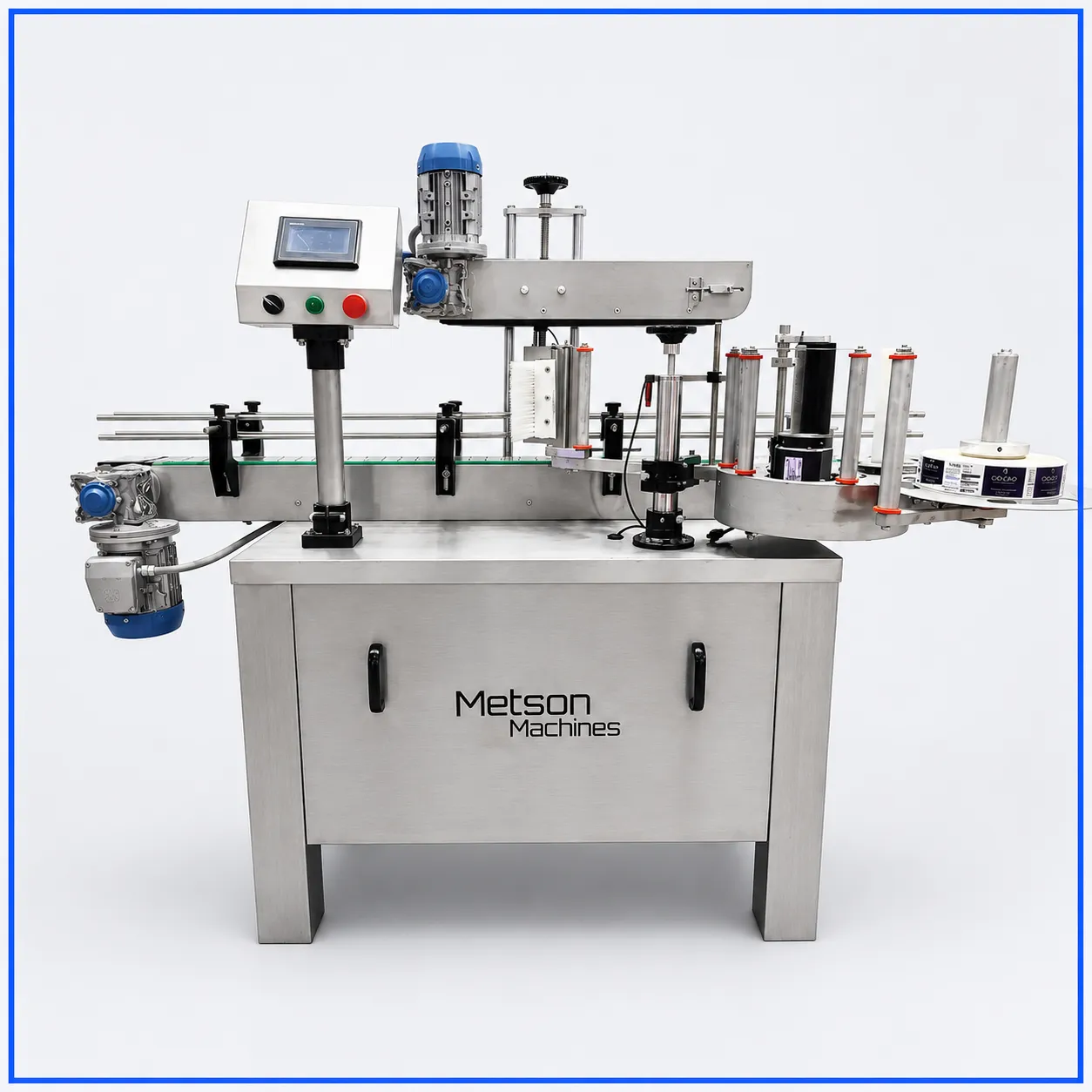
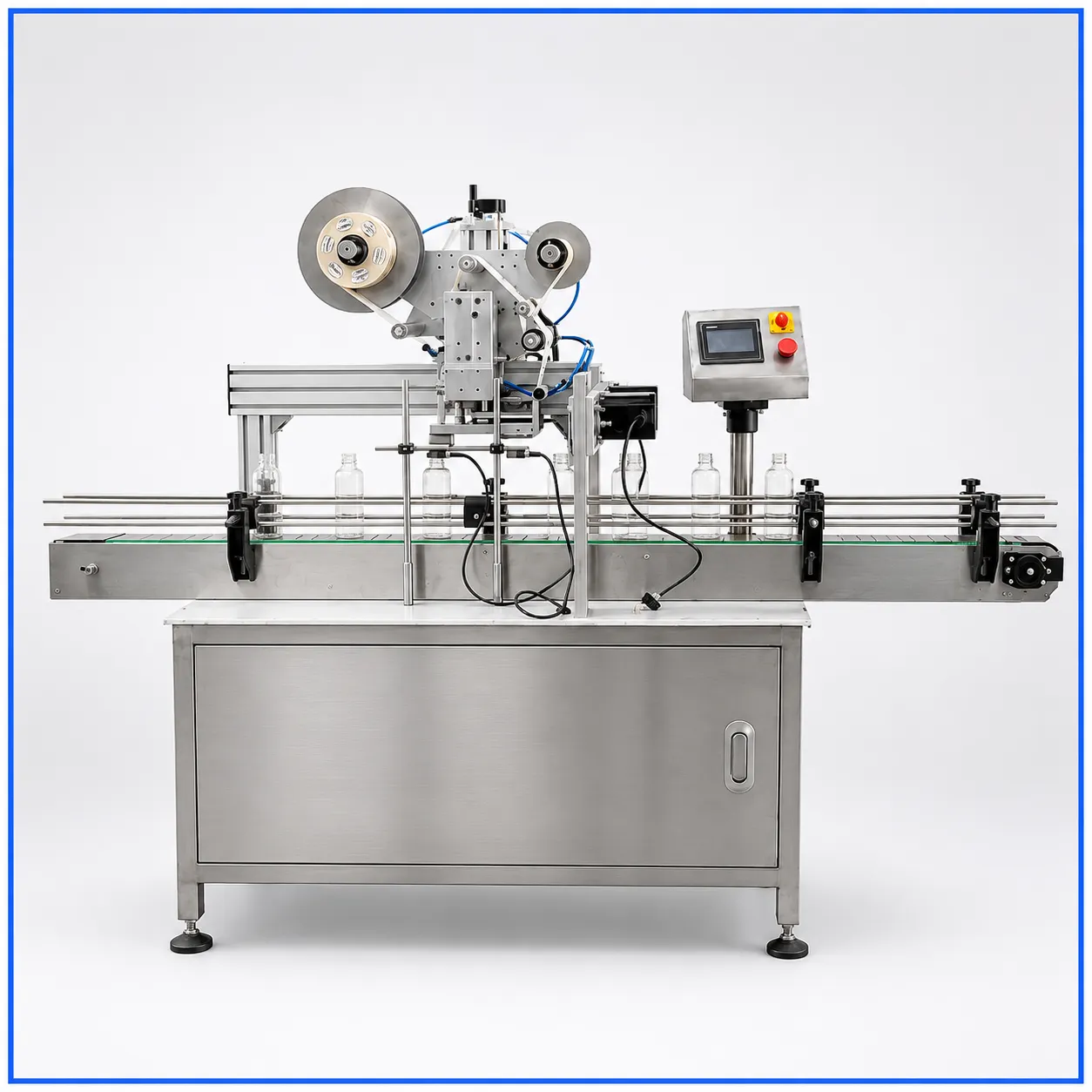
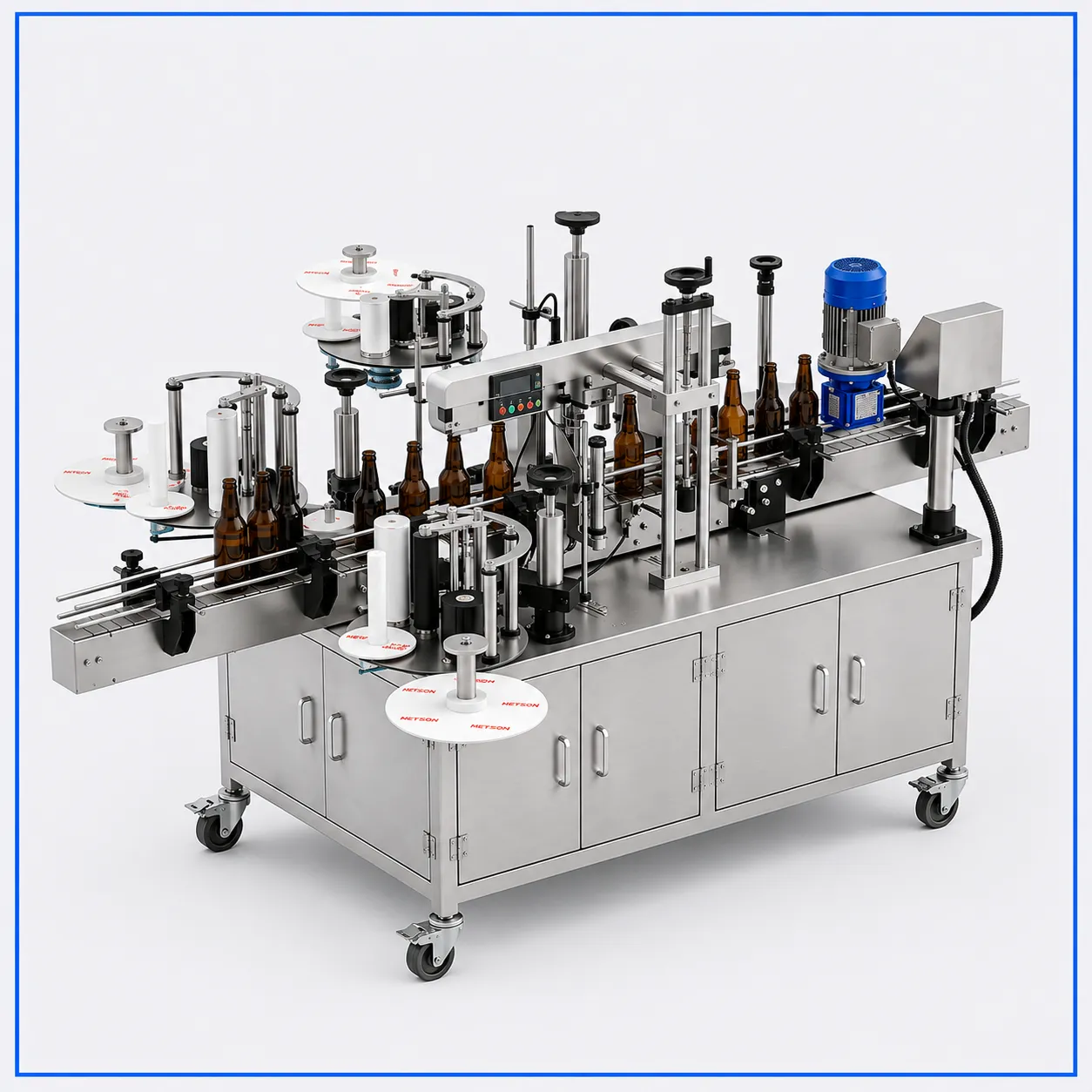
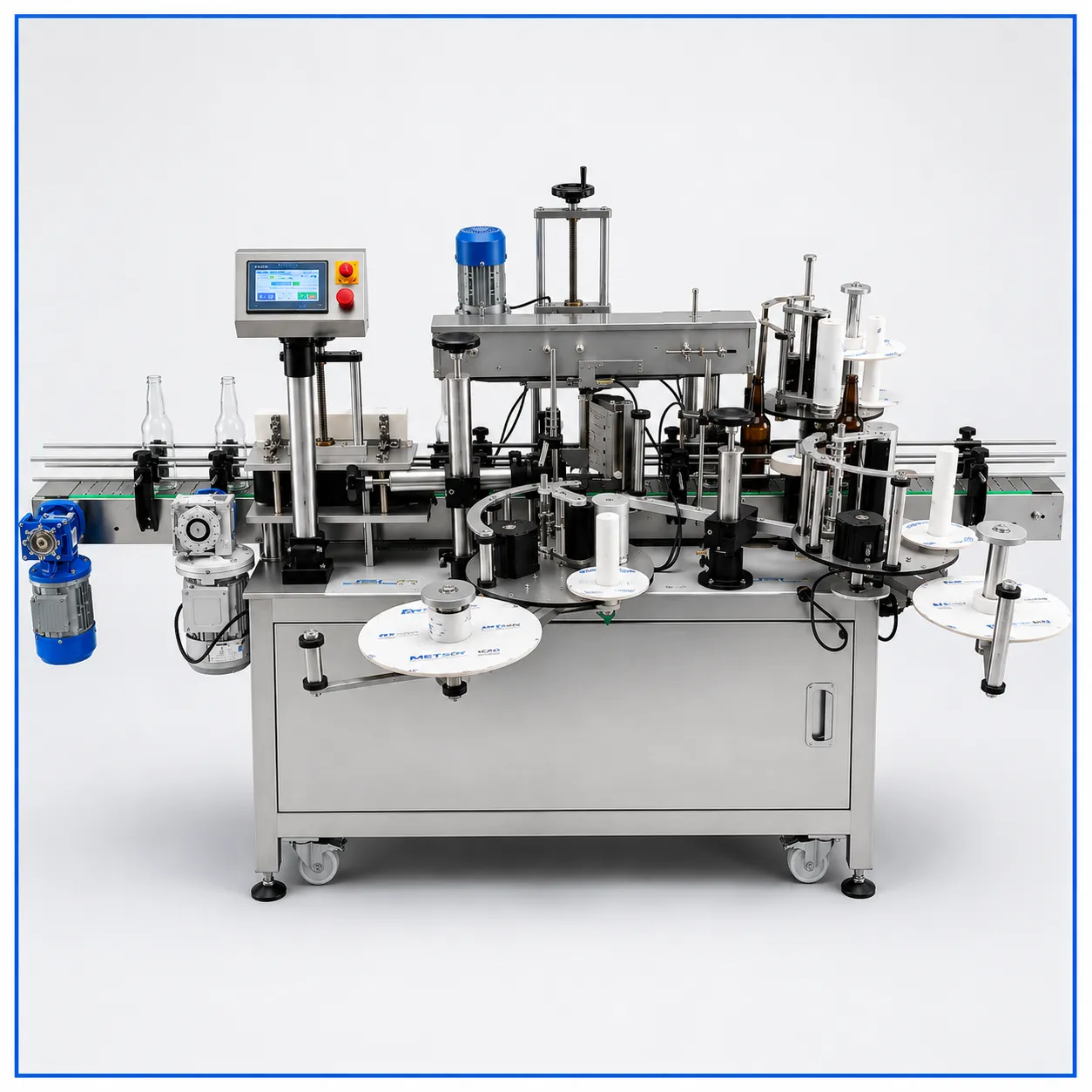
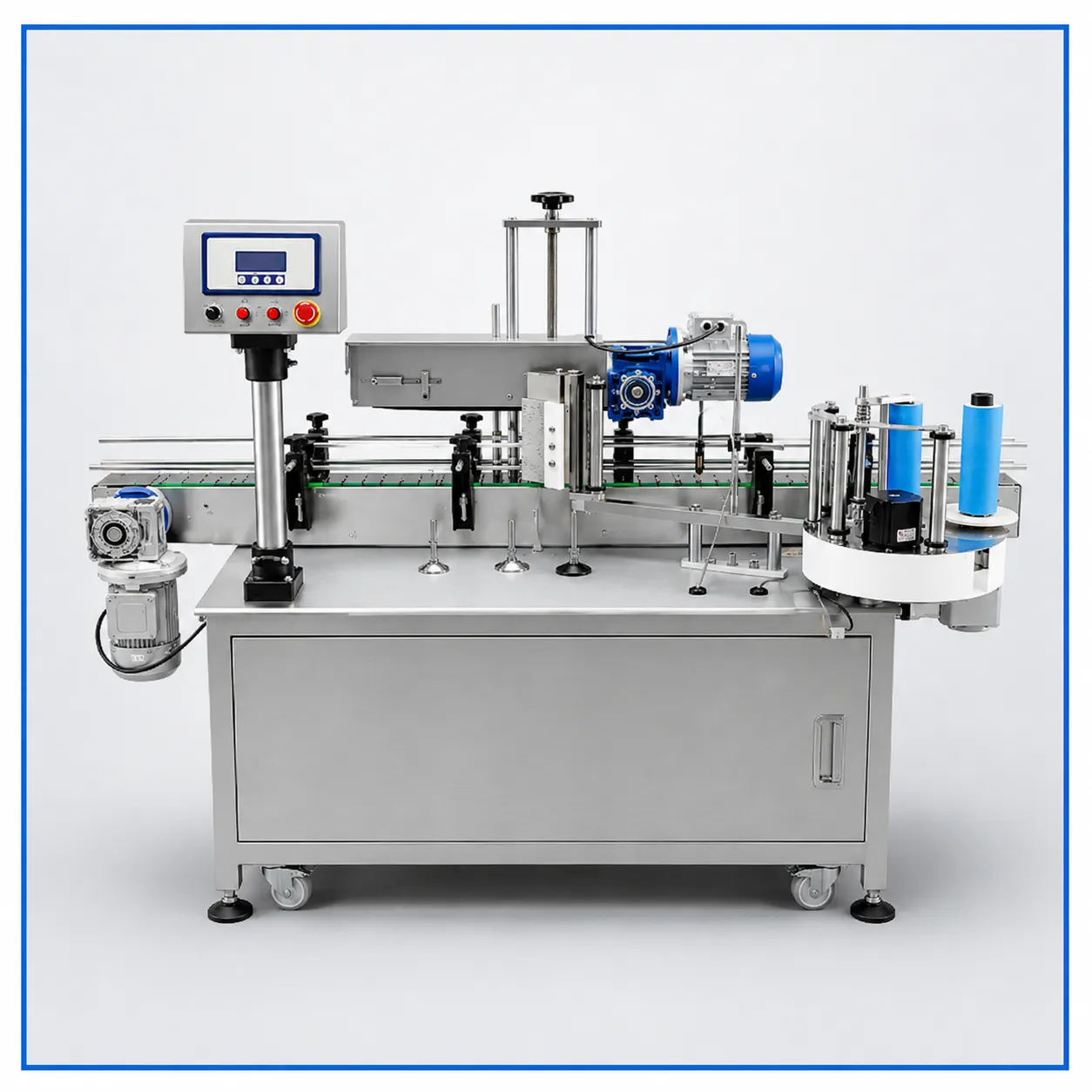
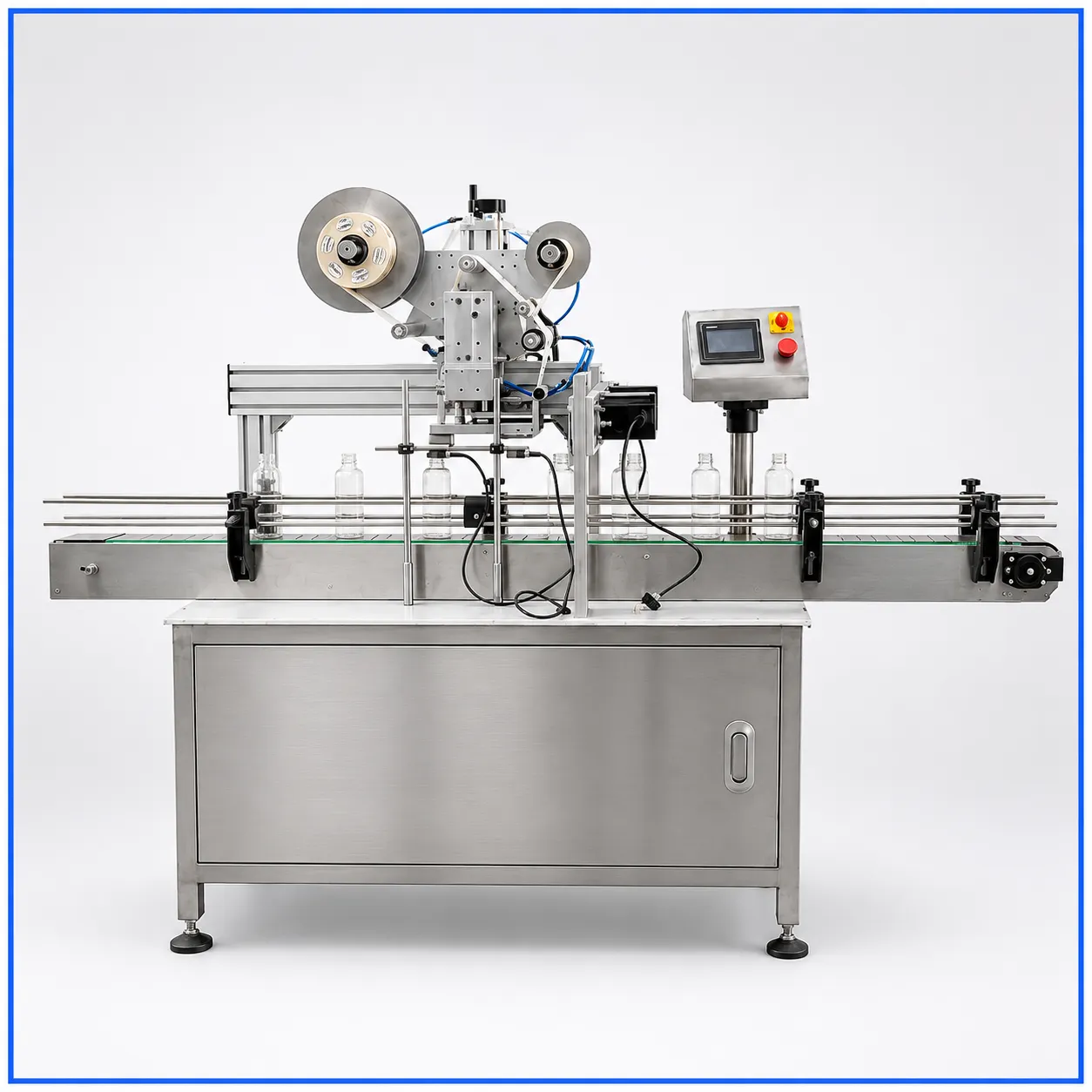
Before comparing manufacturers, first define your application clearly.
1. Give Every Manufacturer the Same Information
Send the same product and production details to every manufacturer. This is the easiest way to make quotations comparable.
You should provide:
- Product type and shape
- Product dimensions and weight
- Label dimensions and material
- Required label position
- Required production speed
- Number of SKUs
- Existing conveyor or production line details
- Future production requirements, if known
For example, saying “I need a machine for bottles at 100 BPM” is not enough. A manufacturer needs to know whether the bottles are round or square, their diameter, height, label size, label position and how many different bottles you need to run.
2. See How the Manufacturer Understands Your Application
This is one of the first things to compare—and you can do it before looking at the price.
A serious manufacturer should ask questions about your:
Product → Label → Application → Speed → SKU range → Production line
If a manufacturer immediately recommends a standard machine without understanding these factors, ask why that particular configuration is suitable.
The quality of the manufacturer’s questions can tell you whether you are dealing with an application-driven manufacturer or simply a salesperson selling a standard model.
3. Don’t Compare BPM Alone
BPM is useful, but it should never be the deciding specification.
Suppose one manufacturer offers 120 BPM and another offers 100 BPM. The 120 BPM machine is not automatically better.
Ask:
What continuous speed can you achieve on my actual product and label while maintaining the required labelling accuracy?
There is a major difference between:
Maximum machine speed
and
Practical continuous production speed.
A machine may be capable of reaching a particular speed under ideal conditions but operate at a lower speed when product shape, label size, spacing or accuracy requirements are taken into account.
Compare these three figures
| Speed | What it means |
|---|---|
| Maximum speed | The machine’s upper rated capability |
| Recommended speed | Practical operating range |
| Tested speed | Actual result achieved on your product |
The tested speed on your application is the most useful figure for your buying decision.
4. Understand How Your Product Will Be Controlled
The labelling head is only one part of the system.
Before the label is applied, the product has to reach the application point in a consistent position.
Depending on the product, the machine may require product guides, spacing systems, side belts, rollers, controlled rotation or other positioning arrangements.
Ask the manufacturer:
“How exactly will my product be positioned and stabilized when the label is applied?”
This is particularly important for lightweight, unstable, tapered or irregular products.
If product positioning is inconsistent, even an accurate labelling head can produce inconsistent results.
5. Compare Labelling Accuracy at the Required Speed
Don’t accept statements such as “high accuracy” without defining what that means.
If your requirement is ±1 mm, tell every manufacturer.
Then ask:
Can you maintain this accuracy continuously at my required production speed?
Accuracy should ideally be demonstrated using your actual product and label.
A short demonstration showing five correctly labelled bottles doesn’t prove that the machine will maintain the same accuracy throughout an eight-hour production shift.
Look for:
- Consistent label position
- No progressive drift
- Correct application at production speed
- Minimal missed or misplaced labels
6. Compare the Actual Labelling Configuration
Two manufacturers may use the same description—automatic sticker labelling machine—but propose different configurations.
The correct configuration depends on what you need to label.
| Requirement | What to Verify |
|---|---|
| Front label | Application method and product positioning |
| Front + back | Number and arrangement of labelling heads |
| Wrap-around | Product rotation/application method |
| Multiple labels | Number and positioning of heads |
| Different SKUs | Adjustment range and changeover |
Don’t select a machine simply because its model name matches your application. Ask the manufacturer to explain how the proposed configuration achieves your required result.
7. Compare Changeover Properly
If you have multiple SKUs, changeover can have a significant impact on productivity.
Don’t ask only:
“Can the machine handle different sizes?”
Ask:
“How do I change from Product A to Product B, and how long does it take?”
Find out:
- What needs adjustment
- Whether tools are required
- Whether settings can be stored
- How product guides are adjusted
- How the labelling head is repositioned
- How many trial products are normally required after changeover
If you change products several times a day, a machine with a slightly lower maximum speed but much faster and more repeatable changeover may be the better investment.
8. Compare Label Wastage
Label wastage is easy to overlook because it doesn’t appear prominently on the machine quotation.
Ask manufacturers how the machine handles:
- Startup
- Product gaps
- Machine stops
- Restarting
- Label-roll changes
- Missed products
- Label detection faults
For high-volume production, even a small amount of unnecessary label waste can become a significant recurring cost.
If possible, ask for the expected label wastage during the product trial.
9. Compare the Quotation Scope Before Comparing Price
This is where many buyers make an incorrect decision.
One manufacturer may quote a lower machine price but exclude equipment that another manufacturer has included.
Check whether the quotation covers the complete requirement:
- Conveyor
- Labelling head(s)
- Product separation/positioning
- Sensors
- Control system
- Safety guarding
- Additional labelling heads
- Rejection system
- Coding/printing, if required
- Installation
- Commissioning
- Operator training
- Initial spare parts
Only after normalizing the scope should you compare prices.
A ₹X lower quotation is meaningless if the machine is missing equipment that you will later need to purchase.
10. Don’t Ignore Machine Construction
You don’t need to compare every component on the machine. Focus on areas that affect stability, accuracy, maintenance and operating life.
Look at:
- Frame rigidity
- Conveyor construction
- Labelling-head mounting
- Adjustment mechanisms
- Product guides
- Drive system
- Electrical panel
- Accessibility for maintenance
Ask the manufacturer why the proposed construction is appropriate for your production environment.
The goal isn’t simply to find the machine that looks the heaviest. It is to find a machine that remains stable and maintainable under your operating conditions.
11. Compare After-Sales Support
The purchase price is only part of the investment.
Before ordering, understand what happens if the machine requires technical support after installation.
Ask:
- Who handles installation and commissioning?
- Is operator training included?
- Where are spare parts supplied from?
- Which parts should be kept as inventory?
- How is remote technical support provided?
- Is an engineer available for onsite service?
- What exactly is covered under warranty?
A reliable manufacturer should be able to give you a clear answer rather than treating after-sales support as an afterthought.
12. Ask What Happens When Your Business Grows
Today’s requirement may not be tomorrow’s requirement.
Perhaps you currently need 60 BPM but expect 100 BPM in two years. Or perhaps you expect to introduce additional bottle sizes or another label.
Ask:
“What can this machine accommodate in the future, and what would require a major modification or new machine?”
You don’t need to purchase every future option today. But knowing the machine’s limitations allows you to make a better investment decision.
13. Make the Product Trial Your Final Test
If possible, give shortlisted manufacturers:
Your actual product + your actual label + your required production speed.
Evaluate the complete result rather than simply asking whether the label sticks.
Check:
- Label accuracy
- Continuous speed
- Product stability
- Label wastage
- Changeover
- Operator involvement
- Machine stoppages
- Finished-product appearance
The trial should answer one fundamental question:
Can this machine reliably perform my actual production requirement, not just demonstrate its capability?
14. Ask the Manufacturer About Limitations
This is an excellent way to distinguish a technically strong manufacturer from a purely sales-focused supplier.
Ask:
“What limitations do you see with my application?”
A good manufacturer should be comfortable explaining where the machine may have limitations—whether related to speed, product geometry, label material, accuracy or future expansion.
You are looking for a manufacturer that gives you a realistic engineering assessment, not simply the most attractive answer.
How to Score the Manufacturers
Once you have the quotations and trial results, score them against the factors that matter to your operation.
| Factor | Importance |
|---|---|
| Application understanding | High |
| Actual product trial | Very High |
| Continuous production speed | Very High |
| Labelling accuracy | Very High |
| Product handling | High |
| Changeover | High for multiple SKUs |
| Machine configuration | High |
| Service & spare parts | High |
| Future flexibility | Medium–High |
| Purchase price | Important, but not alone |
This prevents price from becoming the only deciding factor.
The Five Questions to Ask Before Placing the Order
Before you sign the purchase order, make sure you have clear answers to:
1. What exact product and label specifications is this machine designed for?
2. What continuous speed and accuracy have been demonstrated on my application?
3. What exactly is included and excluded from the quotation?
4. How will product and label changes be handled?
5. What technical and spare-parts support will I receive after installation?
If these five questions are properly answered, you are no longer choosing a machine based on a brochure and price.
The Best Manufacturer Is the One That Reduces Your Risk
The right sticker labelling machine manufacturer should do more than supply equipment.
They should be able to understand your application, recommend the appropriate configuration, demonstrate the machine on your product, clearly state its capabilities and limitations, and support you after installation.
So don’t ask only:
“Who has the lowest price?”
Ask:
“Who has demonstrated the lowest production risk for my application?”
That is the comparison that leads to a better buying decision.
Looking for a Sticker Labelling Machine?
Send Metson Machines your product details, dimensions, label specifications, required label position, production speed and SKU range. If product and label samples are available, they can be used for application evaluation and machine testing before finalizing the configuration and quotation.